Article
What the GC Gets Wrong About Modular Every Time
A GC who has built 50 stick-built multifamily projects is not automatically qualified to button up a modular project. The skills overlap maybe 60%. The other 40% is where your schedule and budget are at risk.
The Foundation
Anchor bolt locations must match factory structural drawings to within fractions of an inch. GCs submit foundation drawings based on their own interpretation of factory documents without getting written sign-off from the factory structural engineer.
The consequence of a misalignment is severe. If anchor bolts are even one inch out of position, modules cannot be set. The options at that point are expensive: core drill new locations, install retrofit brackets, or in the worst case, demolish and re-pour sections of the foundation. Each option costs $10,000 to $50,000 and delays the project by 2 to 6 weeks.
> Require formal factory drawing review and written approval of foundation permit drawings before the pour.
Set Day
Set day is the highest-stakes day of a modular project. Modules arrive by truck, a crane lifts them onto the foundation, and the GC begins button-up work. A GC who has never managed a crane set will underestimate the logistics involved.
Transport coordination requires confirming haul routes, obtaining oversize load permits, and sequencing truck arrivals so modules reach the crane in the correct order. The crane itself needs to be sized for the heaviest module, positioned for reach to the farthest set point, and permitted by the local jurisdiction.
Weather contingency planning is critical. High winds above 25 mph will shut down crane operations. A missed weather window can delay the entire set sequence by days or weeks, depending on crane availability. The GC needs a Plan B before set day, not after the crane is already mobilized.
On multi-day sets, the sequencing becomes more complex. Modules must be set in a specific order dictated by structural engineering. If modules arrive out of sequence, the crane sits idle while the correct module is located and delivered. Idle crane time runs $3,000 to $8,000 per day depending on crane size.
Button-Up Scope
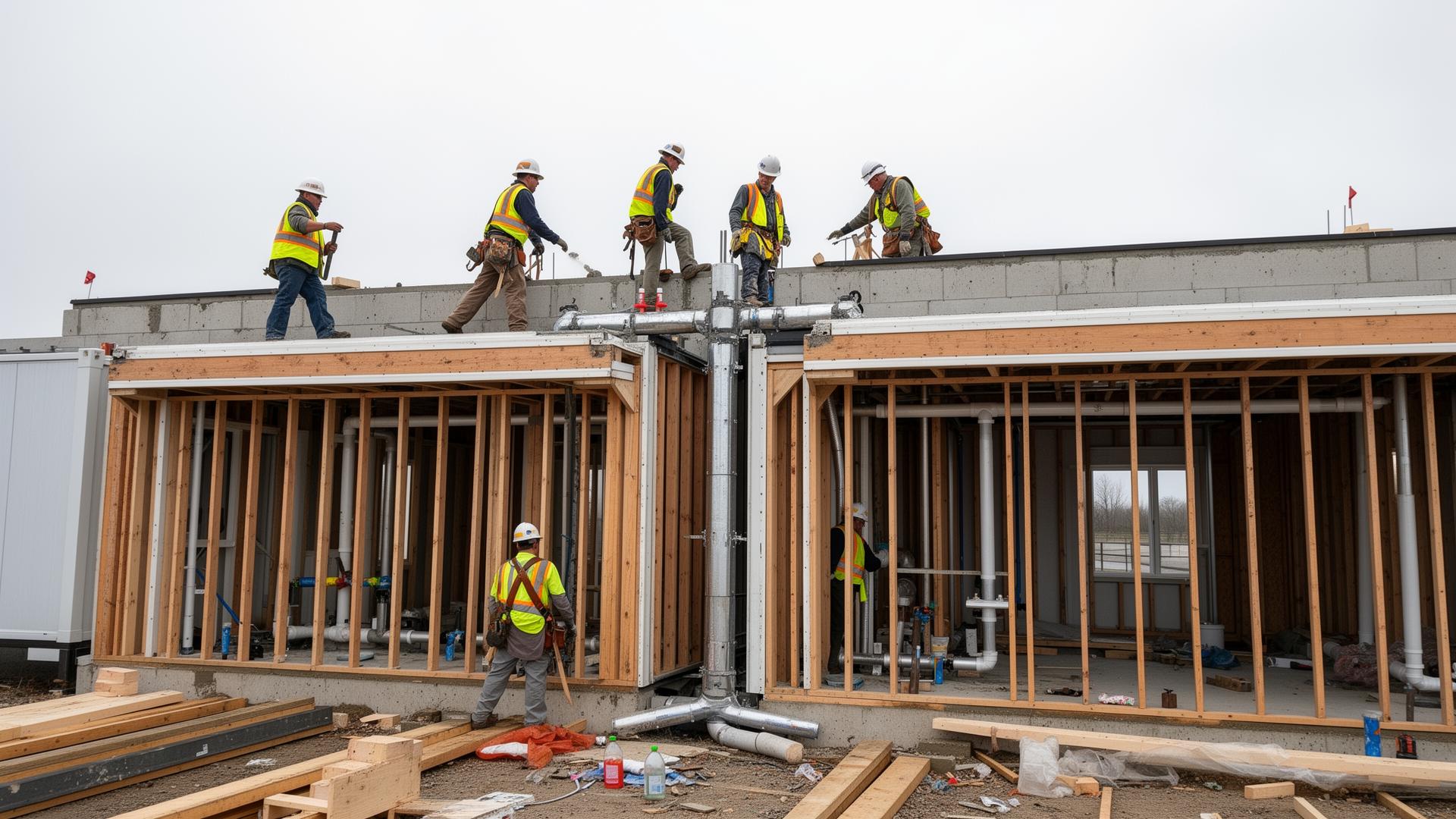
The GC's button-up work, covering marriage walls, module joints, roof connections, and MEP tie-ins, is not standard framing. It requires understanding how factory-built systems connect and which connections are structural versus cosmetic.
Marriage wall work involves joining two modules along their shared wall. The structural connection must match factory engineering specifications. The cosmetic finish must be seamless. GCs who treat this like standard drywall work produce visible seam lines and potential moisture intrusion points.
MEP connections are where the most expensive mistakes happen. Factory-installed plumbing and electrical systems terminate at specific connection points. The site MEP team must connect to these points precisely. A mismatch of even 2 inches can require field rework that costs $5,000 to $15,000 per connection.
Roof connections between modules require waterproofing details that are specific to modular construction. Standard roofing subcontractors may not understand the joint conditions between modules. Water intrusion at module joints is one of the most common warranty issues in modular projects.
The Interview
Before you hire a GC for a modular project, ask how many modular set days they have managed. Ask for references from factory partners, not just developers. Ask what their crane contingency plan is and how they handle weather delays.
A good modular GC will talk about coordination with the factory as a partnership. A GC who treats the factory as a material supplier will create problems you discover on set day.
The 40% of skills that differ from stick-built are not optional. They are where modular projects succeed or fail.