Article
Why Modular Construction Is Gaining Momentum in 2025
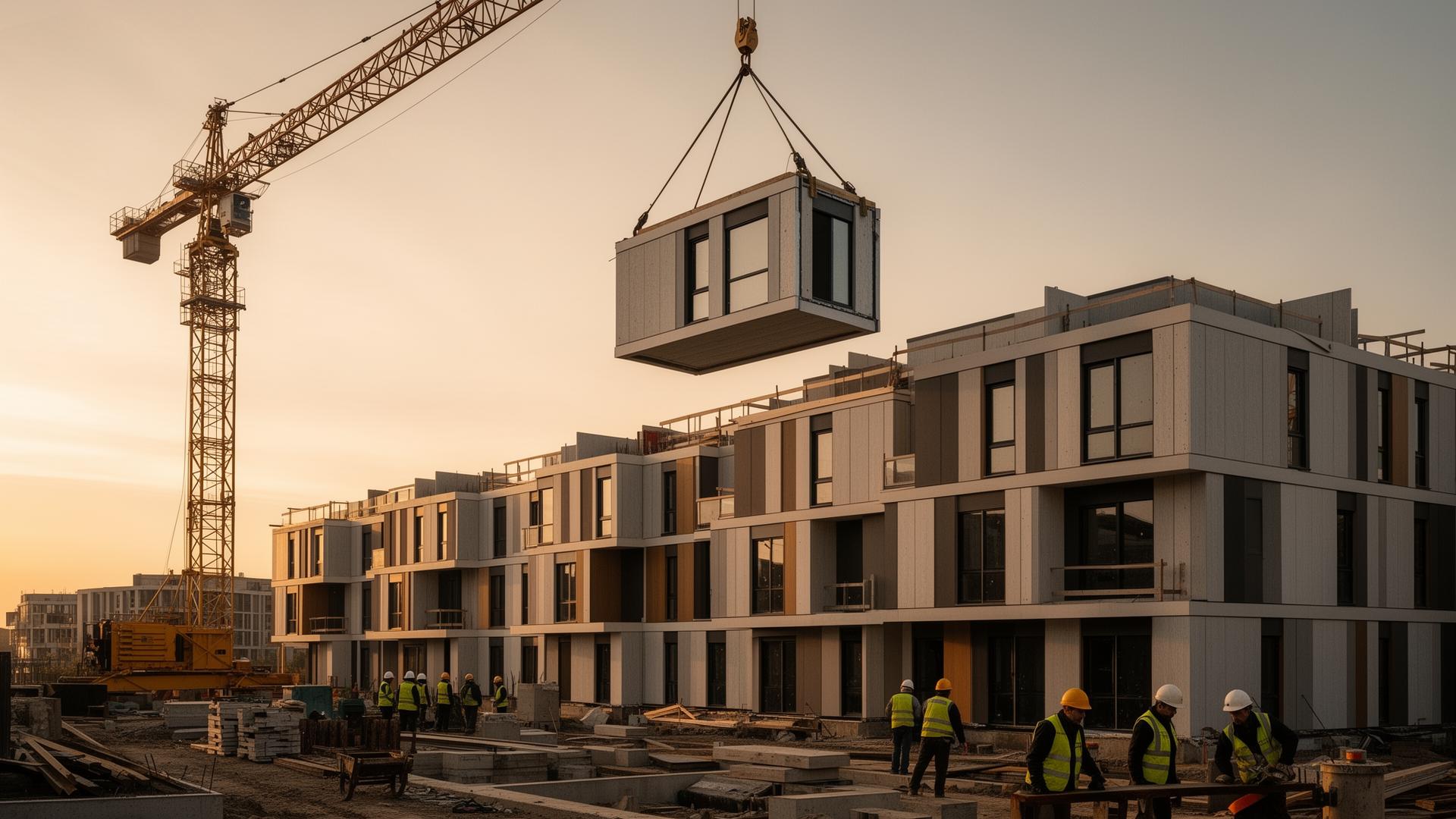
The construction industry faces a structural labor deficit. Factory environments offer measurably higher productivity per worker, and that gap is widening every year.
The Labor Equation
State and local governments are recognizing modular construction as a tool for housing supply. Pre-approved plan sets, streamlined permitting pathways, and density bonuses for modular projects are becoming standard across California and other high-demand states.
> The question is no longer whether modular works. It is whether the coordination infrastructure exists to support it.
The Real Barrier
Factory capacity, design standardization, and site-to-factory sequencing remain the critical variables. Traditional development workflows assume sequential, site-based construction. Modular requires parallel workstreams, factory scheduling, and precise logistics coordination.
Most development teams are not set up to manage this. The ones that build operational infrastructure around parallel execution will have a structural advantage over the next decade.